Overview
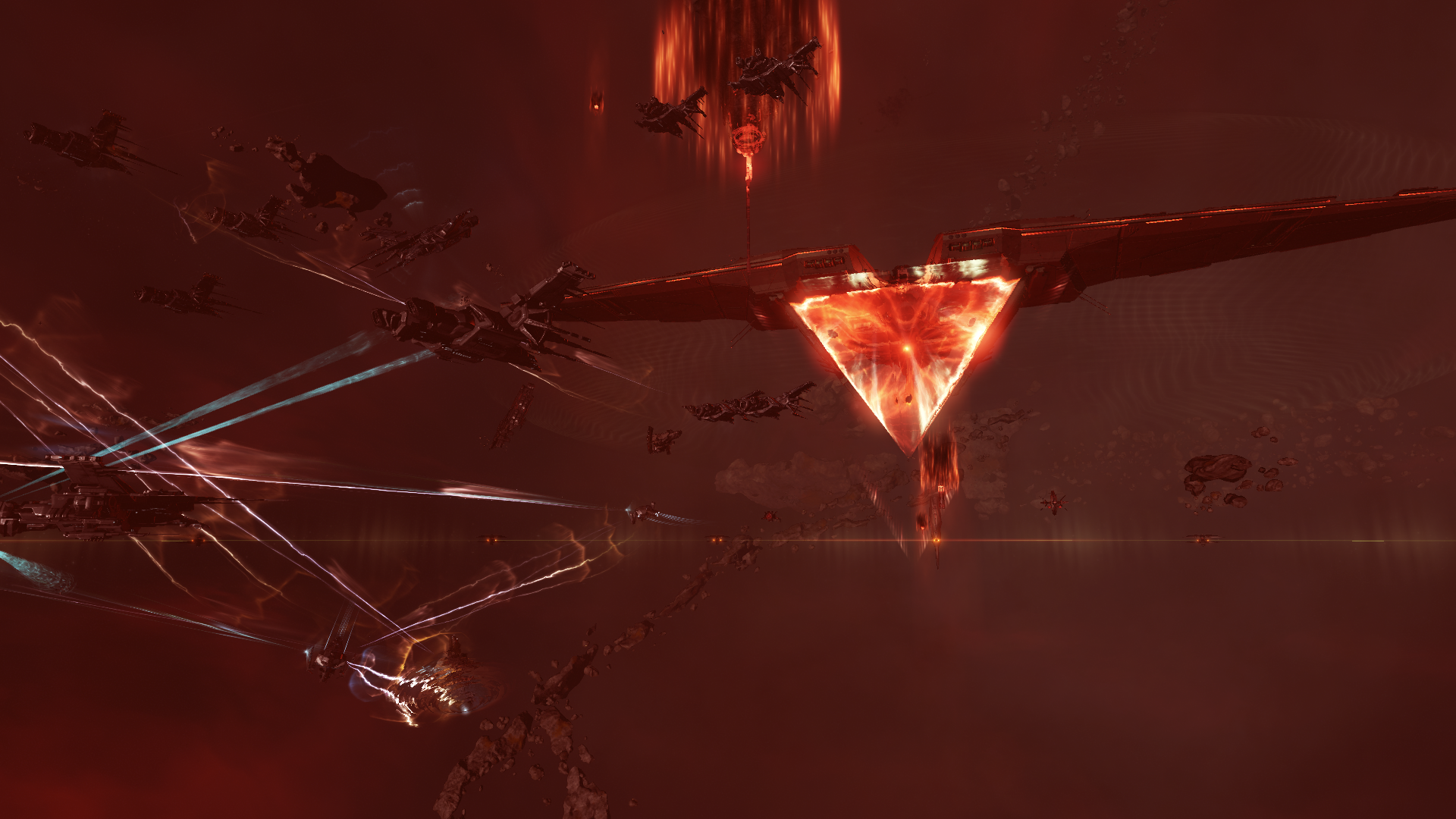
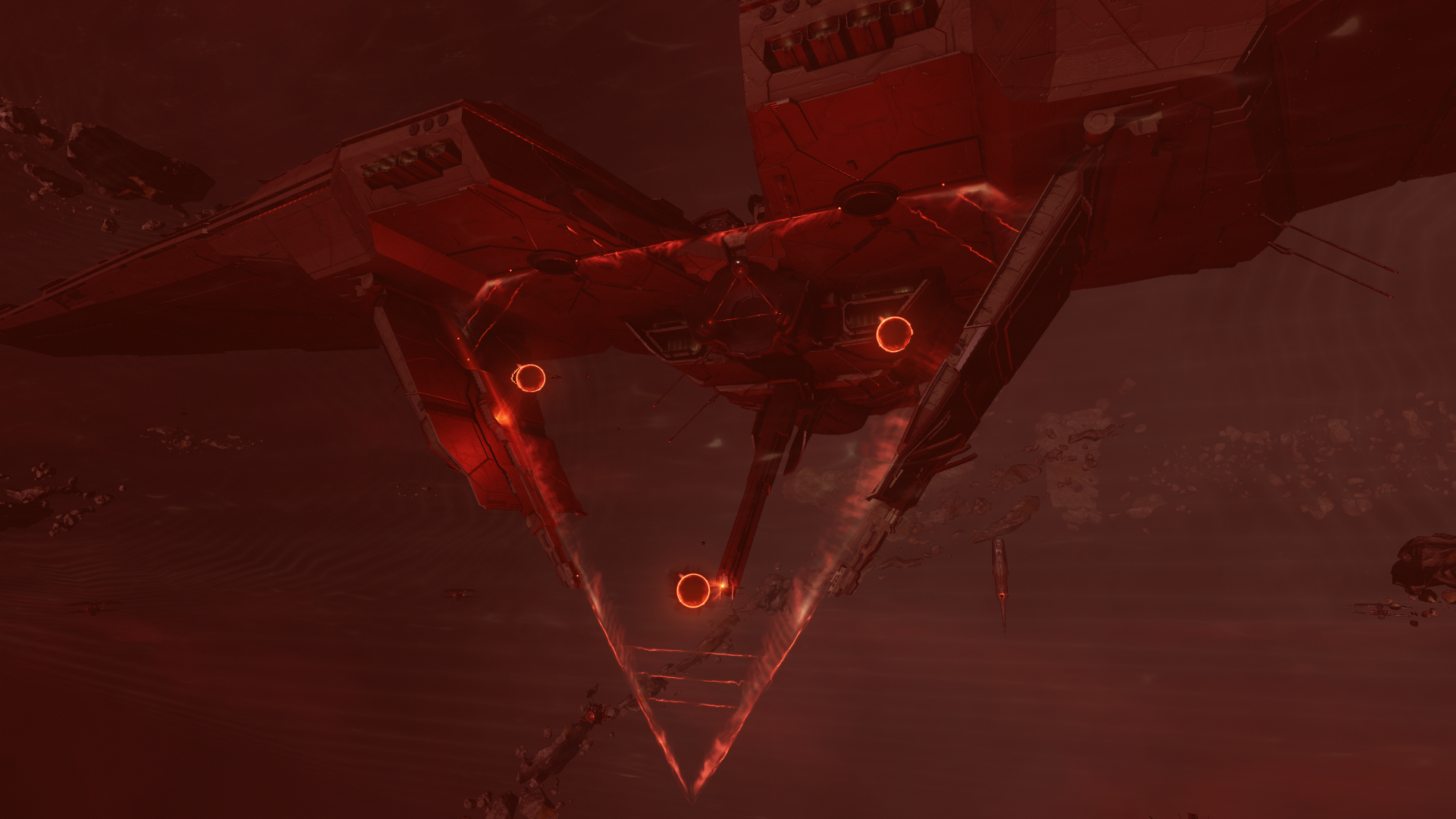
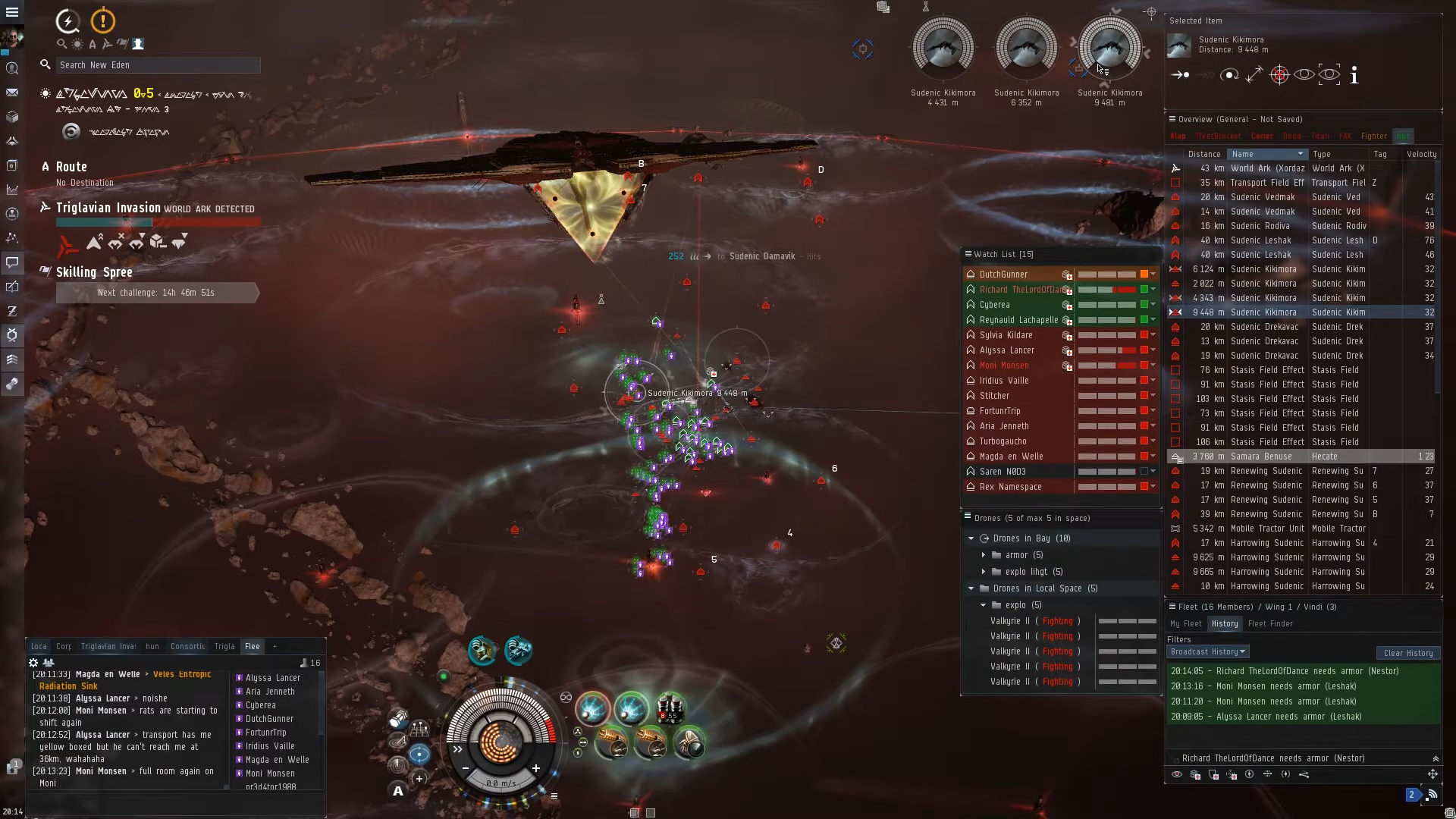
The World Ark Dungeon was the capstone content piece for Chapters 1 and 3 of the “Invasion” live event arc for EVE Online. It is a single-room, multi-phase encounter featuring combat waves that emerge (spawn) from a massive structure. Killing specific NPCs within the waves triggers new phases to start, which may overlap. Phases are defined by beacons that spawn and emit area effects that force players to adapt in real time. After all waves have been defeated, the structure disappears, leaving a field of salvage to loot and completing the dungeon. If players fail to drive off the structure and all leave the site, it resets.
The Problem Space:
EVE Content is often not very dynamic. Most NPCs have very similar and predictable behavior, and once a piece of content begins there is little that changes throughout. This is due in part to the extreme customizability of a player’s ship, and the fact that characters are not separated into roles and niches like in many other MMOs - any character can customize their kit to match that of any other character. This means that often there is a single tactic identified as the best for a piece of content, and it is merely repeated throughout its duration until completion.
The Goal:
What I wanted to bring to EVE was a content experience closer to a WoW-style raid boss: something with phases that required changes to tactics, coordination with a team, constant challenge, but could be learned and planned around. Loss in EVE is significantly more meaningful and powerful than traditional MMOs, however, and content can not rely on players dying over and over again until the experience is learned and finally “solved.”
The Release Schedule:
Chapter 1 saw a relatively simple, if large and difficult, dungeon release. It explored dynamics of shifting and limited terrain in static, predictable phases, seeking to highlight the unique needs of these elements in our game. Chapter 3 re-released the dungeon, updated with new systems that had been individually built and tested in smaller content drops.
Design: The Arena
The Problem:
Content in EVE typically exists in a near-infinite space, allowing players to largely bypass any placed terrain.
A popular tactic for completing content with minimal player risk or effort entailed setting up a ship to snipe content from an absurdly large distance.
Most content solutions at the time gave NPCs equally absurd ranges, mostly eliminating the tactical value of range.
At long ranges, EVE content often feels cold and unimportant.
The Solution:
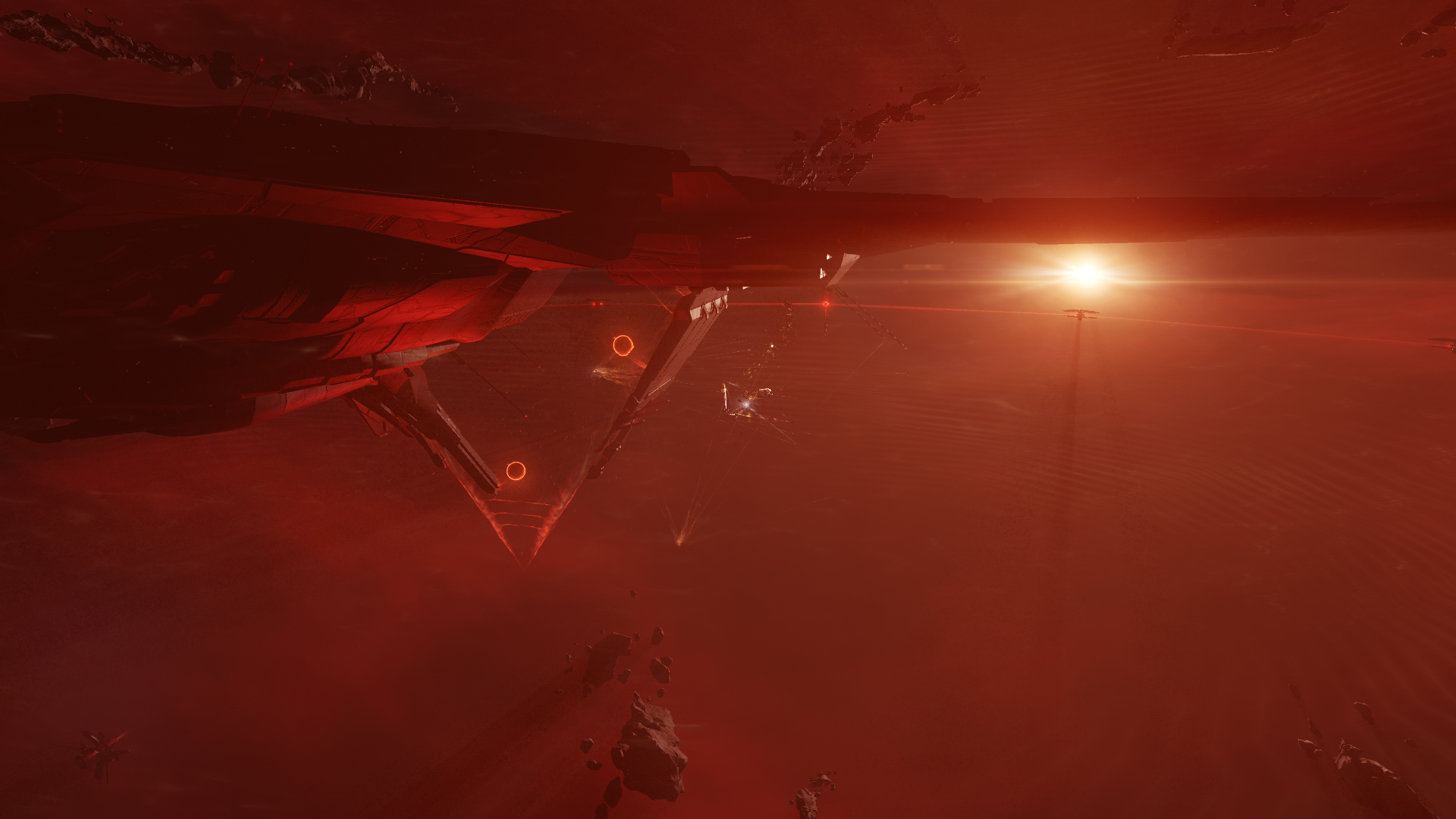
Create a spherical arena to constrain content within a defined, finite space.
Ships outside of this space take large amounts of damage over time, providing opportunity to learn and correct while removing extreme sniping as a viable tactic.
At the center of the area, a giant, non-destructible ship (the World Ark) creates both a physical obstacle and imposing presence, keeping content present for the player regardless of where they are in the arena.
Result:
With a defined play space, content could be structured to remain relevant, dangerous, and present. Spawning enemies and phase changes were immediately impactful, and players were forced to evolve their strategies around the unique constraints.
Design: Dynamic Structures
The Problem:
EVE Content is often a static problem-space, enabling a small - or even singular - tactical set to provide a universal solution for the experience.
An evolving play-space was desired, providing a classic MMO raid “DDR” dynamic where players were challenged to move around according to a fight’s phase.
EVE Online ships are (generally speaking) either fast with very little health, or big, slow, and designed to sit in one place. The latter is what players typically bring to handle PvE content, making constant movement an unusual element.
Unlike most MMOs, where characters sit on a ground and can be flattened to a roughly two-dimensional space, EVE combat exists in three dimensions. This makes DDR challenges more complex to design, communicate, and engage with.
The Solution (Ch 1):
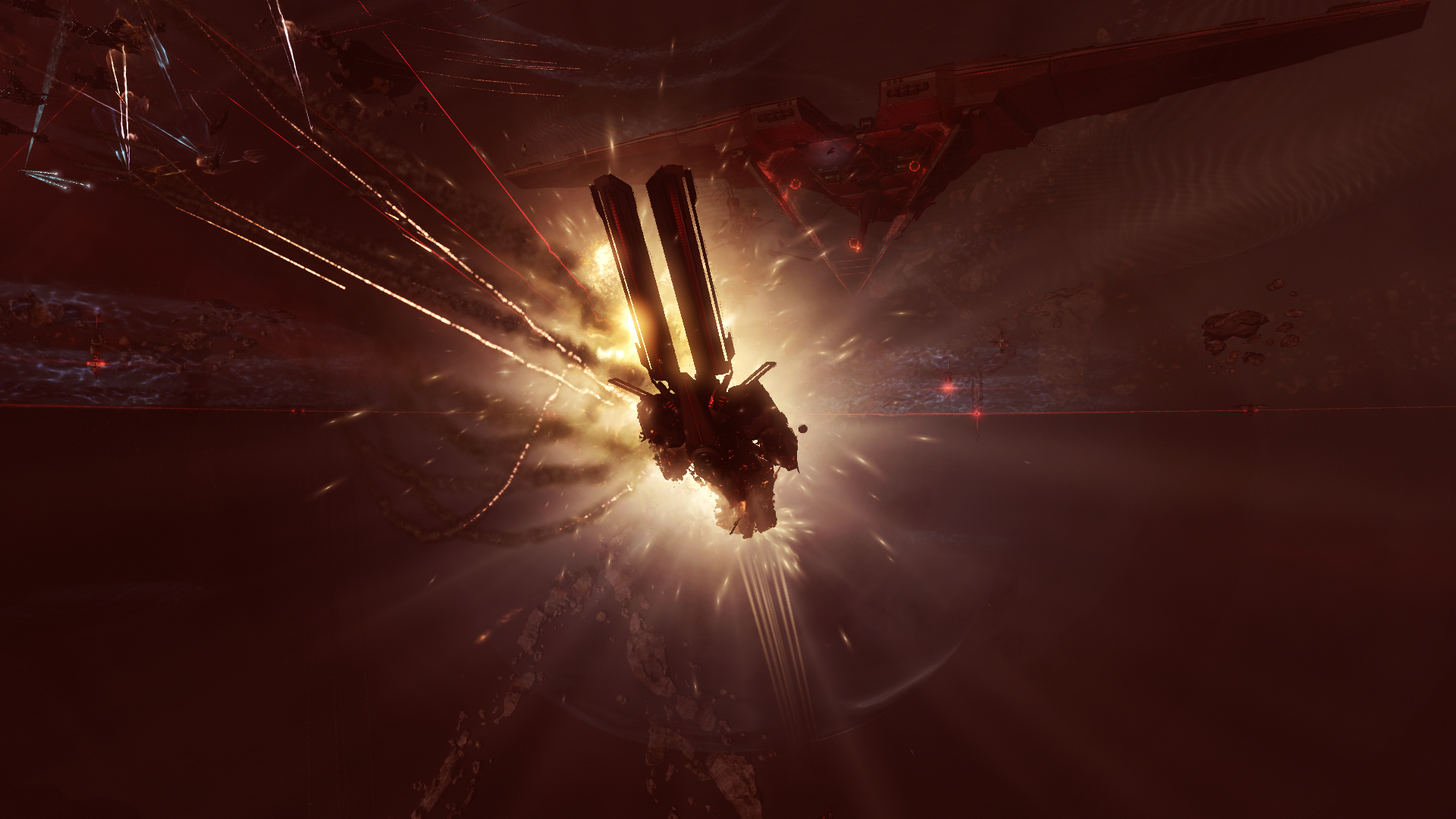
At learnable, defined phases, beacons spawn at set locations around the arena.
Each beacon causes largely-negative effects to all players within a set distance of itself, including
Area of effect damage pulses
Disruption of targeting systems
Teleportation of players to the edge of the arena
Disruption of player movement
Beacons communicate their impact via a visible sphere of its influence and are named based upon its effect.
Beacons have a brief warm-up period to give players time to react.
Beacons can ultimately be countered by either staying outside of their influence, or destroying them.
Ch 1 Problems:
To sufficiently cover the arena, beacons needed to either be very large (undermining players’ capacity to avoid them) or very numerous (heavily impacting on-screen noise and graphics load)
Players eventually identified locations on the map that were never covered by the beacons, and simply relocated there at the outset of play, effectively eliminating the relevance of beacons.
The Solution (Ch 3):
A smaller number of beacons are dynamically deployed based upon where the players are, increasing their relevance to the player while heavily decreasing visual clutter and mechanical noise.
At set intervals, the World Ark targets a player and deploys a beacon at their location. If there are already two such beacons deployed, the oldest unspawns.
Among NPC swarms are unique ships that fly towards players and regularly deploy smaller beacons in their midst until defeated.
The variety of effects that beacons transmit was expanded to create a more diverse play experience
Result:
Beacons broke up the monotony of constant NPC battles, introducing shifting challenges and bringing a rhythm to the dungeon. They were lightly predictable, providing players the capacity to study, plan, and strategize around them, but also required collective snap decisions mid-play and tested group coordination.